
The Challenges
Brief description of the project:
The objective of the project was to achieve improved and sustained access to water and sanitation services in rural communities.
In pursuance of the above project objectives, focus was given on the following strategies:
(i) Implementing demand-responsive and sustainable community water supply services, providing basic drinking water and sanitation facilities to about 32 communities in the 6 districts, through construction and rehabilitation of water points, piped systems and sanitation facilities;
(ii) Strengthening community capacity to plan, implement, operate and maintain their facilities through community participation and formation and training of Water User Committee (WUC) and water and sanitation (WATSAN) committees, and training community members in better hygiene practices, so as to maximize health benefits and ensure sustainability of water supply schemes through community ownership and management;
(iii) Developing district-level capacity to deliver community water supply services, encouraging the private sector and NGOs to play an active role in the delivery of goods and services and assisting District Councils (DCs) in planning, implementation and management;
(iv) Promoting and providing support for efficient and sustainable rural water supply and sanitation facilities which are appropriate, (i.e. affordable, acceptable and adaptable) to the users, through private sector provision of goods and services and public sector regulation, facilitation, promotion and co-ordination;
(v) Maximizing health benefits by integrating water supply, sanitation and hygiene education;
(e) Involvement: As Senior Water Engineer; Assistant Project Manager
My role and assignment in the project above, contained distinct components as described below:
- Assess and confirm community demand for the type and level of service, physical survey of the proposed communities to identify and locate water sources. The following sequence was followed upon execution of the project,:-
- Mobilization and Preparation of Assessment Reports
- Field work
In order to facilitate the fieldwork, itinerary and agenda were circulated and agreed upon with the respective communities in advance.
- Visit the community and ascertain the complexity and impact of the low access to adequate RWSS on the poverty situation.
- Compile information on the status of water supply and sanitation of communities in the district.
- Carryout rapid environmental and social assessment of the community.
- Assess the capacity of the community to manage the implementation of the NWP and the NRWSSP in general and RWSS project in particular.
- Assess the availability and capacity of implementation agents (Contractors, Suppliers, NGOs, etc) in the District/Region, and the efficacy of private Sector Supply Chain for post construction spare parts, repair and overall maintenance support community subjects, explore readiness of the District Council and Communities to effectively implement the Programme using information such as district capacity willingness of the District Council to budget for RWSSP, size of district Community Water Fund, and capacity of the community to manage their WS Scheme.
- Confirmation of the rehabilitation/new project requirements of the water supply and sanitation facilities outlined in the District Water and Sanitation Plans.
- Identification and location of potential water sources and sanitation facilities in consultation with the communities and discussion with them on technological options and their implications for O&M.
- Analysis of existing practices relating to water supply and sanitation (i.e. relationship between disease and hygiene habits of the community, particularly children).
Analysis of the effective demand (i.e. communities’ willingness and ability to pay for water supply and sanitation) and evaluation of the technical, financial and management capacity of each community were performed
As far as office work was concerned, I was involved in the following tasks: –
- Preparation of community assessment report
- Use data obtained from Physical survey of the proposed communities to identify and locate water sources
- Preparation of the Facilities and Management Plans
- Detailed designs and layouts
- Preparation of bills of quantities, and
- Preparation of cost estimates,
- Preparation of project implementation Programme
- Assisting communities prepare Facilities Management Plan
- Construction Supervision of the sub projects..
(f) Achievements:
The following are achievements obtained in the course of implementing and managing the project: I managed to get clear exposure and acquire a good working experience in the following engineering fields:
- Decisions on the best water source options:
– Spring should be considered first, if they exist
– if surface water sources must be considered, then treatment shall be required
– Consider a combination of sources
– Machine drilled boreholes may be necessary if they are the only feasible
sources
- Engineering activities in Emergency situations
- Design of Gravity and Pumped Water supply scheme
- Construction of Water works structures
-Reinforced concrete block work storage tanks
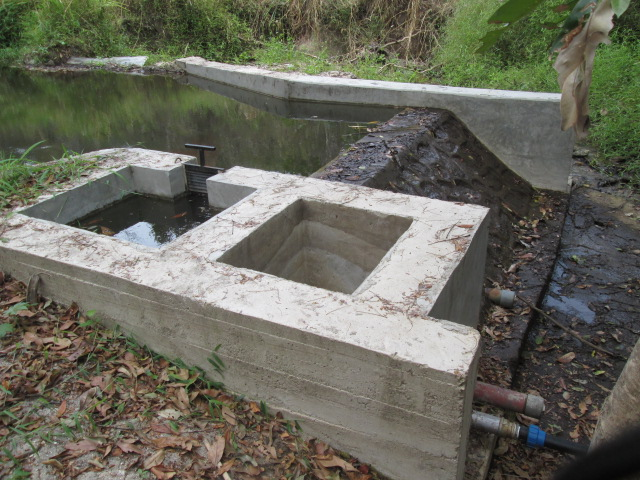
-Stream Intakes
- Budgeting, ordering and control of project materials equipment and funds, management and report writing.
- Drilling of deep wells, Test pumping and Designing
- Design of rural water supply projects
- Preparation of technical working drawing
- Preparation of Bill of quantities (BOQ)
- Preparation of Engineering estimates and Tender documents
- Evaluation of Contract tenders
- Construction of ring, stone and bricks lined dug wells
- Protection of springs and construction of spring boxes for piped water supply
- Participatory rural water project management
- Monitoring and Evaluation of water projects
- Assessment of rural water supply and sanitation project
- Computer aided Design Software
-AutoCAD
– Epanet 2.0
– WaterCAD
- Setting up structure for Operation and maintenance Organization
- Operation and Maintenance of rural water schemes